Techniques Used

The methods I work with — each one shaping the final piece in its own way.

The traditional method

Leaded Glass

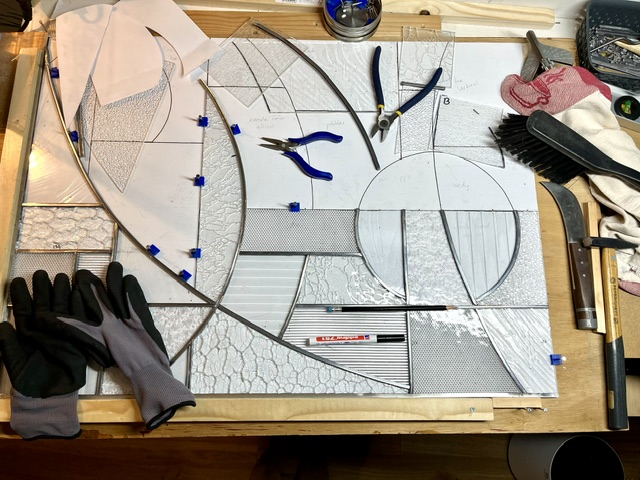
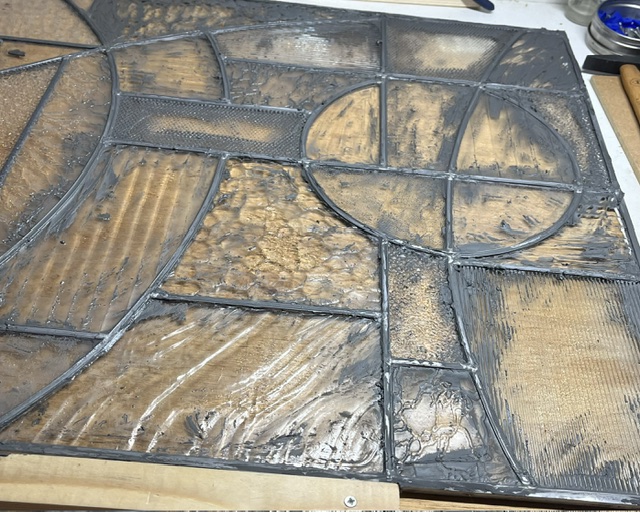
Leaded glass is the classic technique at the heart of stained glass art, used in cathedral windows for centuries. Each piece of glass is cut individually to shape, then fitted into H-profile lead strips called "came." The lead came holds the pieces together and forms the characteristic dark lines you see in traditional stained glass work. Once all the glass is assembled within the lead framework, the joints are soldered to hold everything firm. A special putty or cement is then pressed into the gaps between the glass and the lead, giving the finished panel its strength and weather resistance. This is my primary method.
The Tiffany method

Copper Foil

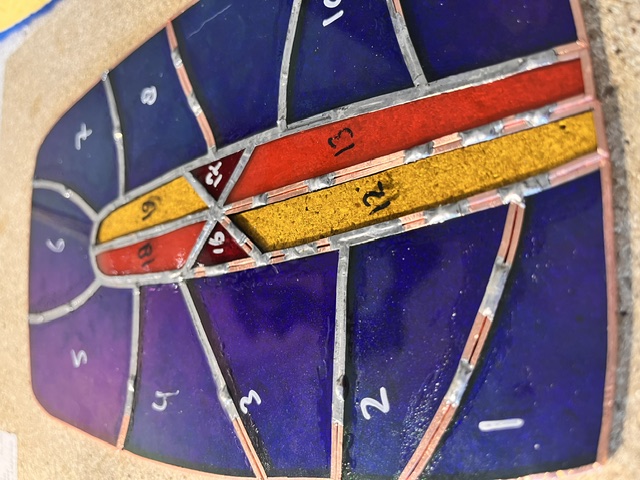
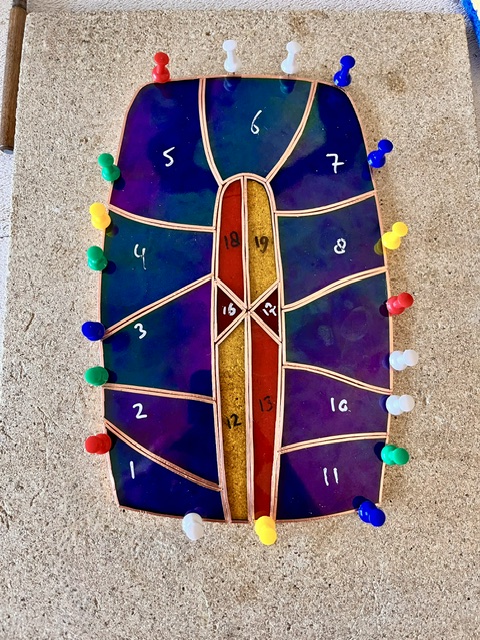
The copper foil technique was developed by Louis Comfort Tiffany in the late 19th century and gives his famous lampshades their distinctive look. Rather than using lead came, each piece of glass is wrapped around its edges with a strip of self-adhesive copper foil tape. Once all the pieces are wrapped and arranged, solder is flowed along the copper seams to bind everything together. Because copper foil can follow tight curves and intricate details more easily than lead came, it is especially well suited to small, complex designs and three-dimensional objects. It gives a finer, more delicate result than traditional leaded glass.

Exploring further

Glass Painting

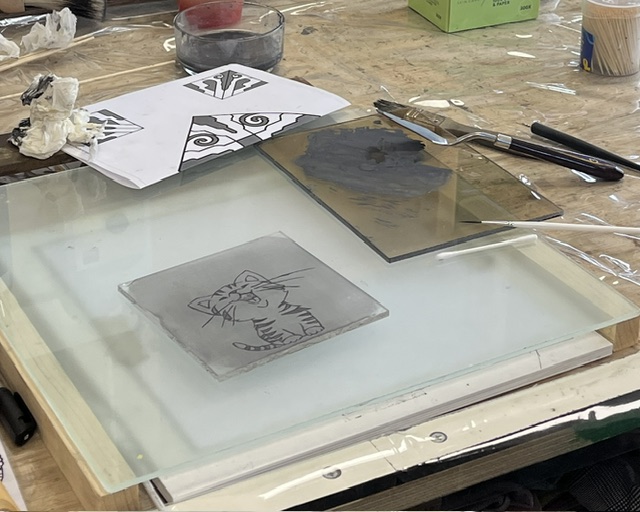
Glass painting is a technique where special mineral paints or vitreous enamels are applied directly to the glass surface, adding fine detail, shading, and tonal variation that glass selection alone cannot achieve. Once painted, the piece must be fired in a kiln at high temperatures — typically between 580°C and 680°C — to permanently fuse the paint into the glass. I completed a course in glass painting and found it a wonderful complement to my cutting and leading work. For now, though, I don't yet have a kiln of my own, so this is a technique I'm very much looking forward to exploring further.